
Oct 9, 2026Journal
What Go-To-Market Support Should Come With Your ODM Order?
Your container arrives — does the range sell? The go-to-market support an ODM order should include: selection story, scene visuals, selling cards and team enablement.
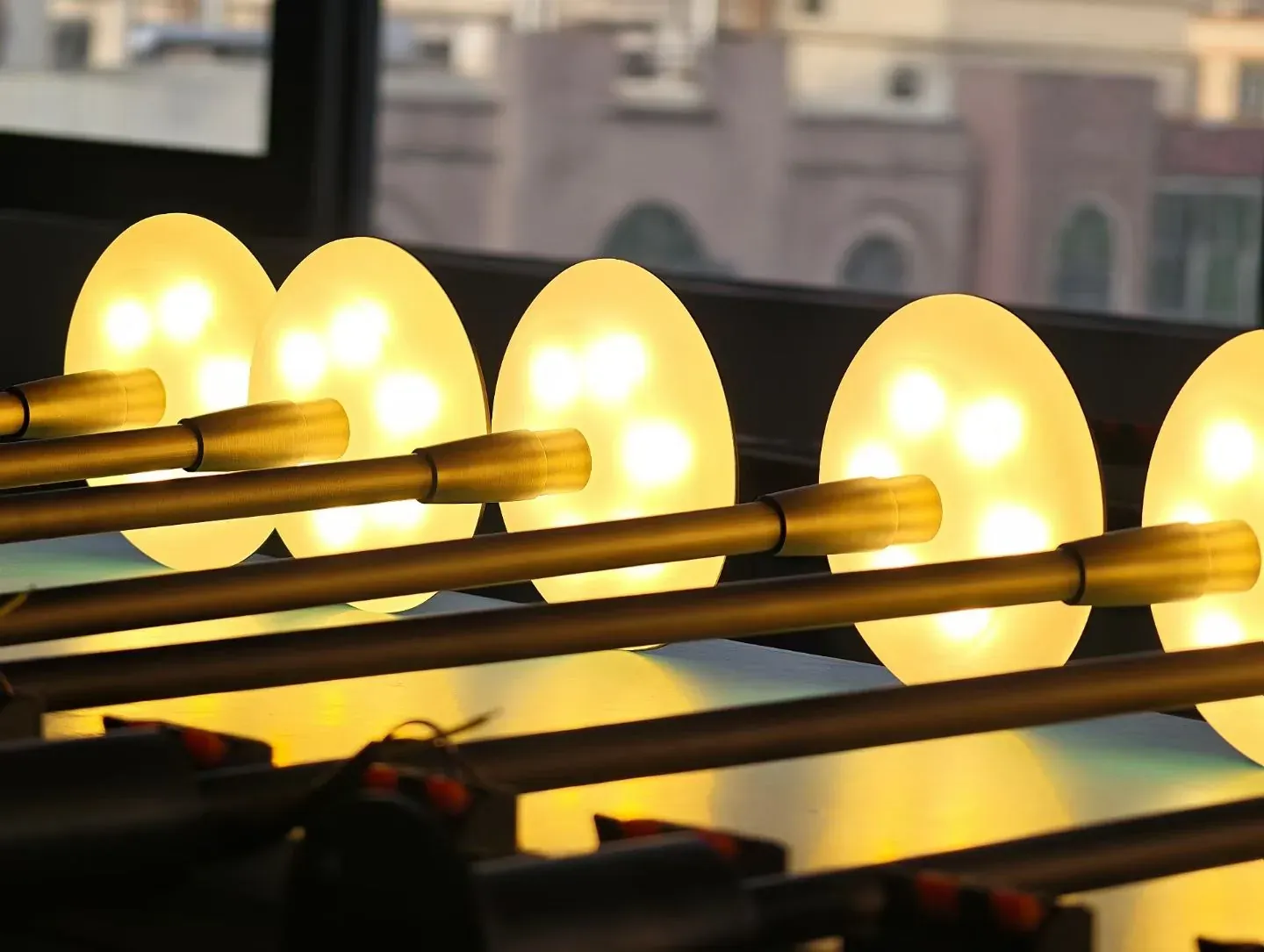
Two containers leave the same workshop on the same ship. Both are well-made. One range is selling by autumn; the other is still explaining itself in the warehouse. The difference was decided before the freight — in the assets and the story that travelled with the product, or didn't.
Most suppliers define the job as "load the container". For a brand, the job is only half done at the quay. The product-side work that turns a shipment into a selling range is what this article is about — and it is worth writing into the project scope, not hoping for at the end.
The Gap After the Container
A new garden range arrives without the things its maker takes for granted: a selection story that tells a buyer which model does which job; scene visuals showing the range installed after dark; per-model selling points reduced to the three facts a shop assistant can repeat; and a team that knows what to say when asked, "why this one?"
Without that layer, the range is a set of beautiful objects waiting to be explained — and explanation is the most expensive thing to purchase after the fact.
What Shelf Support Actually Contains
1. A selection story. Why this range exists and how it's structured: which model is the entry point, which carries volume, which is the hero — good-better-best logic a distributor can re-tell without you in the room.
2. Scene visuals. The range photographed or rendered as it will live: along a path, under a pergola, lighting a facade. Usable in your webshop, your catalogue and your trade-show screen — where a lit scene outsells a product cutout.
3. Selling-point cards. Per model, three to five facts that close a sale: the IP rating for its position, the colour-temperature range (2700–6000 K across our 2026 families, with 3000 K specified for European gardens), the material and finish (aluminium, five standard powder-coat colours), and the warranty term. The facts a salesperson can be trusted with.
4. Range architecture. Model naming, tier structure and display logic — so a dealer shelf looks like a co-ordinated family, not an inventory.
5. Team enablement. Training your sales and customer-service teams on the range: what to say, which comparisons to avoid, how to answer specification questions without guessing.
Why It Belongs in the Order — Not After It
Ask for shelf support after the container has shipped, and you are purchasing a service. Structure it into the development project, and it is a deliverable: the scene visuals come from the same photography the project already commissions; the selling cards come from a specification file that already exists; the training happens on the sample the factory already has. It is the lowest-cost part of the project to get right early, and the most expensive to reconstruct later.
Six Questions to Ask Before You Place the Order
- Which go-to-market assets come with this order, and at which step do they arrive?
- Who owns the scene visuals — can I use them in my webshop and print catalogue without restriction?
- Are selling-point cards per model included, and in what format?
- What does team enablement look like — a session, a video, a document?
- Do the asset timelines fit my launch date, not the production date?
- If the range expands next season, do the assets extend with it?
The answers separate a supplier from a development partner — and they cost nothing to ask.
How We Work
Shelf support is the seventh step of our ODM process, not a favour after it. Alongside the container, we prepare go-to-market plans, merchandising assets and team enablement for the launch — so the line doesn't just get made, it sells. It is the part of the cooperation our clients quote back when they renew.
FAQ
Is go-to-market support standard in ODM orders? No — most suppliers stop at the container. If selling is your success metric, ask for shelf support as a named deliverable in the project scope, and agree which assets arrive at which step.
What does go-to-market support cost? It is usually a modest fraction of the project, because the raw material — samples and specification files — already exists in the development process. Treated as an add-on after shipping, the same work costs multiples more.
I have a marketing team — do I still want it? Yes, for a different reason. Your team brings brand and channel knowledge; the partner brings product-side material: scene visuals from the production photography, selling cards from the specifications, and training from the people who built the seal. The two layers multiply, they don't duplicate.
Launching or extending a garden lighting range? Send us the four inputs — design reference, technical parameters, target budget and estimated volume — and we will reply with a feasibility view, including the launch-support plan. [Start a project](https://www.noorarchlighting.com/contact)
New here? [Browse the collection](https://www.noorarchlighting.com/products?category=solar-portable) to see how our ranges are built for the shelf across wall lights, bollards, spike spots, inground uplights and solar.