
Oct 9, 2026Journal
ODM, OEM, Private Label: What's the Difference for a Lighting Brand?
ODM, OEM and private label explain who owns the design, the tooling and the risk — a plain-language guide for lighting brands choosing a development model.
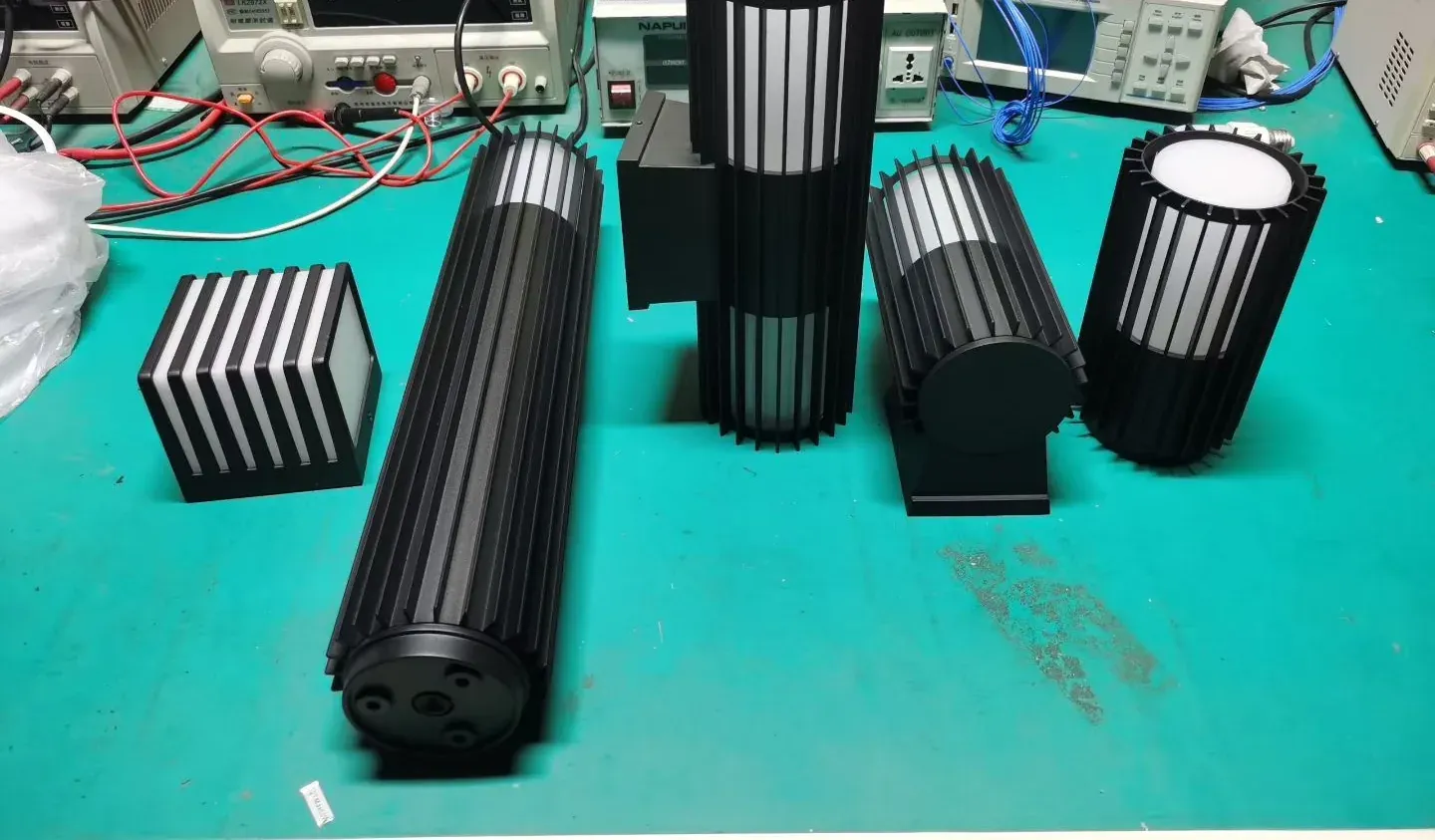
The three terms arrive in the same supplier email, often in the same sentence, as if they were synonyms. They are not. ODM, OEM and private label describe three different deals about one thing: who owns the design, the tooling and the risk.
Get the model right and a brand can build a differentiated line with sane investment. Get it wrong and you end up owning a catalogue that any competitor can order from the same factory next season. Here is the plain-language version.
The Three Models on One Page
| OEM | ODM | Private Label |
|---|---|---|---|
Who designs the product | You (or your designer) | The development partner, with you | The partner — design already exists |
Who owns the tooling | You, in a full-development project | Existing moulds: the partner. Private moulds: you | The partner |
What you can change | Everything to your specification | Finishes, sizes, light sources on existing tooling; new forms via new tooling | Label, packaging, sometimes finish |
Engineering workload on your side | High — you carry the drawings, BOM and compliance documentation | Low — development partner coordinates structure, sourcing, documentation | Minimal |
Time to first shipment | Longest — full development cycle | Short for modified products; a full cycle for private moulds | Shortest |
Differentiation | Highest — it is your product | High for private moulds; moderate for modified ranges | Lowest — you are one of several brands on the same product |
Where it fits | Brands with in-house engineering | Brands that want real product ownership without building an engineering department | Fast market entry, test launches, accessory ranges |
OEM in Practice
OEM means you bring the design and the factory builds to your specification. It is the right model when you genuinely have the engineering: your drawings, your BOM, your compliance documentation, your quality criteria. The factory's job is faithful execution, and the tooling is yours.
The hidden cost is on your side of the table: industrial design, tolerance decisions, gasket and sealing design, sourcing of LEDs and drivers, certification planning. Brands underestimate this once, and then rarely twice.
ODM in Practice — and Its Two Speeds
ODM means the development partner holds the product development capability: structure design, tooling, sourcing, sampling, documentation, inspection. Two speeds matter here, and buyers often conflate them:
- Modified ODM on existing tooling. The fastest legitimate route to a differentiated range: change the finish, the height, the light source or the beam on a mould that already exists. No tooling investment, short lead time, and the changes belong to your range brief — not to a copy of a competitor's product.
- Private-mould ODM. A genuinely new form, developed for your brand. The mould is customer-funded and customer-owned: it serves your brand exclusively and cannot be sold to other buyers. This is the model for a brand that wants a product nobody else can list.
Private Label in Practice — Fast, and Its Ceiling
Private label is the short path: an existing product, your logo on the box, on the shelf next month. It is a legitimate way to test market response, fill an accessory line, or meet a supermarket deadline.
Its ceiling is built in. The same product is available to every other brand the partner serves; the design is not a differentiator; and the buyer who asks "what is unique about this range?" already knows the answer. Private label is a tactic. It is rarely a strategy.
The Questions That Decide
Whatever the acronym on the quotation, four questions settle the actual deal:
- Who owns the tooling — in writing? In a private-mould project, ownership should be explicit, along with what happens if the cooperation ends.
- Is the mould exclusive? A customer-funded private mould that can be offered to your competitors is not private.
- Who owns the drawings and the design file? Your design inputs, revision history and technical documents should be yours.
- What is the pilot structure? A pilot run in the 100–200 pcs per SKU range lets a brand test five models before committing to volume — ask for it before you need it.
How We Work
We work as an ODM partner: from drawing to shelf, our team coordinates industrial design, tooling, sampling, sourcing, certification lab coordination and freight — with German-standard documentation throughout. Private moulds are customer-funded and customer-owned; modified-tooling projects reuse existing moulds to cut cost and lead time. If that sounds like the model your range needs, the first step costs nothing but four inputs.
What "documentation throughout" means in practice: every model in the 2026 ranges we supply carries a page with its IP rating, colour-temperature range (2700–6000 K), light source, A/B/C dimensions and warranty term — plus dimension drawings. That is the standard your own range is held to.
FAQ
Is ODM more expensive than OEM? Not inherently. Modified ODM on existing tooling is usually the lowest-investment route to a differentiated product, because the tooling investment was amortised long ago. A private-mould ODM project adds a tooling investment that is yours — customer-funded, customer-owned — and it delivers exclusivity. OEM's real cost sits in the engineering you must bring yourself.
Can my private mould be used for other clients? No — a customer-funded private mould serves your brand exclusively. Make that exclusivity explicit in the project agreement, including what happens at the end of the cooperation.
Can I start with private label and move to ODM later? Yes, and it is a sensible ladder: private label to test the market, modified ODM to differentiate, a private mould for the hero product. The design file and the relationship carry over; the investment steps up only when the market earns it.
Working out which model fits your next garden line? Send us the four inputs — design reference, technical parameters, target budget and estimated volume — and we will reply with a feasibility view, including the model we would recommend. [Start a project](https://www.noorarchlighting.com/contact)
New here? [Browse the collection](https://www.noorarchlighting.com/products?category=bollard-path) to see the output of private-mould and modified ODM projects across wall lights, bollards, spike spots and inground uplights.